


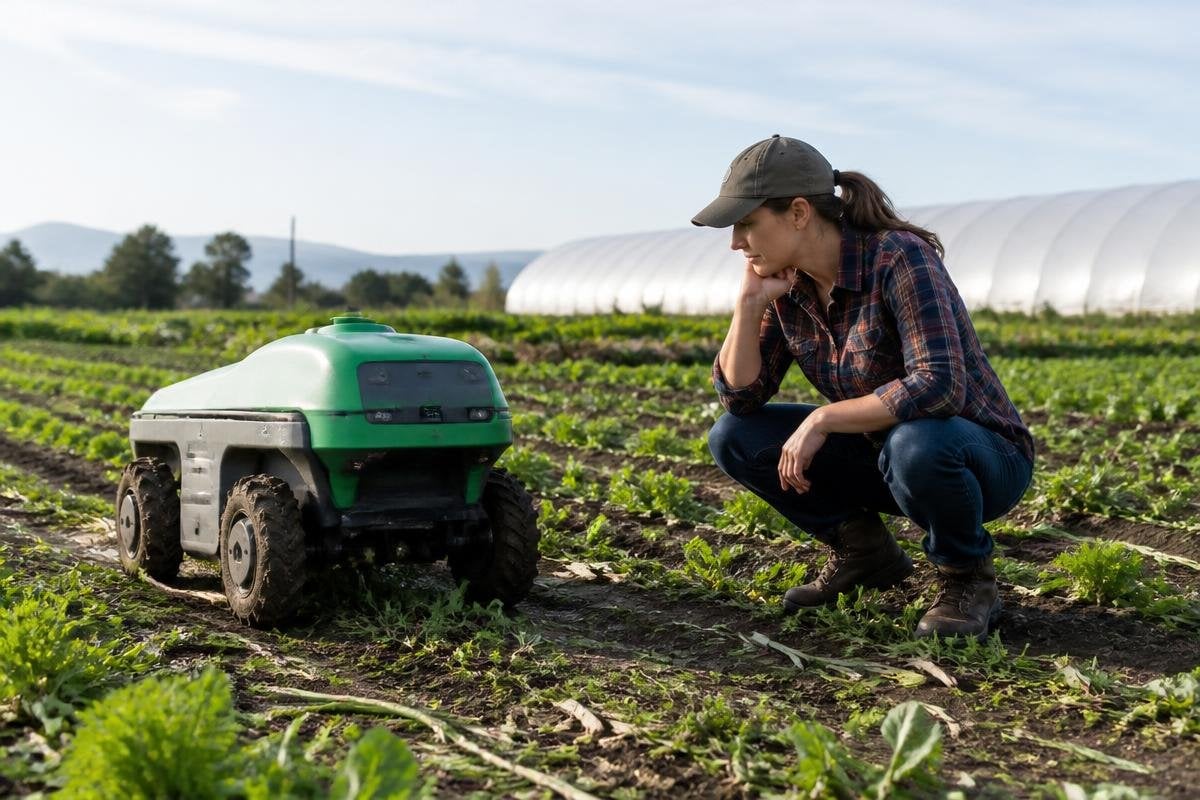
A farm robot has to earn its place through one clear job, not a long feature list. For a small farm, the question is whether the machine cuts a real cost or solves a task that people cannot cover.
- Start with one repeatable task
- Count the full cost, including setup and repairs
- Keep a human plan for days when the robot stops
Start with the job, not the machine
Small farms often have limited cash, staff, and spare time. That makes a narrow purchase safer than a robot bought to handle many jobs at once.
Write down the task in plain terms. It might be moving trays, checking crops, removing weeds, or carrying loads between two fixed points. Then record how often the task happens, how long it takes, and what happens when nobody does it.
That last point matters. If missed work causes damaged produce, delayed planting, or extra hours for the owner, the task has a cost beyond wages. If the work can wait until next week, a robot may sit unused for long periods.
A machine that repeats the same route in a controlled space is easier to judge than one expected to work across changing fields. Uneven ground, dust, rain, slopes, animals, and people can all affect how a robot moves and senses its surroundings.
Count the full cost
The purchase price is only one line. Add the parts needed to run the robot, the time spent learning its controls, and the work required when it reaches a problem.
Ask the seller for a written list covering the robot, its end tool, batteries, chargers, spare parts, software fees, support, delivery, setup, staff training, repair times, and warranty limits.
A low price can change quickly if the robot needs a special tool for each crop or a technician for routine faults. A higher price may make sense when the same machine can work through several seasons.
A payback record needs the robot’s purchase price and yearly service bill beside the hours it can work during harvest. Robot 24 can put those figures next to named farm robots and reported field tests. That gives you a fair starting point before you work out how many seasons the machine needs to pay for itself.
Work out the payback
Use the farm’s own records. Estimate the hours the robot could handle in a month, then compare that figure with the monthly cost of buying, financing, charging, maintaining, and supervising it.
A robot may save labor without removing labor. Someone still has to load it, clear its path, check its work, charge it, and respond to an alarm. Those minutes belong in the calculation.
Season length matters too. A machine used for 12 weeks of harvest has a different case from one used throughout the year. Write down the number of working days, expected hours per day, and the value of the task during each season.
The result should answer one plain question: how many months of useful work are needed before the robot has paid back its cost? If the answer depends on perfect weather, full use, or no repairs, the estimate is too kind.
The robot must also fit the place where it will work. Measure door widths, turning space, slopes, ground types, charging points, and the distance between work areas before signing an order.
Support can matter as much as the hardware. Ask who answers a fault call, where parts ship from, and how long a repair normally takes. A farm that loses a week during harvest may need local help, a spare unit, or a manual method ready to use.
The open question is the robot’s work in the exact conditions on your farm. A controlled demonstration can show that the system moves and completes a task. It may not show how it handles mud, crop change, poor visibility, or a blocked route.
A buying check for small farms
Use this list before comparing models:
- Name one task: describe the job, route, load, and time window.
- Record the baseline: measure current labor hours, delays, waste, or missed work.
- Price the whole system: include tools, charging, software, training, service, and repairs.
- Set a stop point: decide what result would end the trial.
- Plan manual work: keep a way to finish the task if the robot is offline.
- Review after one season: compare actual hours and costs with the estimate.
I’d wait if the seller cannot show how the robot works on ground and crops close to yours. A small farm can afford a robot when one paid task supports the cost; it cannot afford a machine that needs a new reason to run every morning.